


Reading Time: est. 6 minutes
On this page
The best journal for self-discovery depends on how you think. If you want prompts that do the heavy lifting, start with The Five Minute Journal by Intelligent Change — it takes five minutes a day and keeps you moving. If you want structure for a bigger goal, The Self Journal by BestSelf is a 13-week planning system built for exactly that. For a blank slate you can fill any way you want, the Leuchtturm1917 A5 Dotted is the standard. And if you’re specifically writing morning pages to unlock what’s in you, The Artist’s Way Morning Pages Journal by Julia Cameron is the one built for it.
This article is about which journal to buy and for whom — guided vs. blank vs. dotted, and which fits your situation. For how to actually use a journal for self-discovery once you have one, see our self-discovery journal guide. You might also want to start with questions to figure out who you are before you pick up a pen.
At a Glance
| Journal | Best for |
|---|---|
| The Five Minute Journal by Intelligent Change | Daily guided reflection in 5 minutes |
| The Self Journal by BestSelf | 13-week goal-focused self-discovery |
| Leuchtturm1917 A5 Dotted Hardcover by Leuchtturm1917 | Blank dotted pages, numbered and indexed |
| The Artist’s Way Morning Pages Journal by Julia Cameron | Three-page morning stream-of-consciousness |
| Moleskine Classic Notebook, Large Hardcover by Moleskine | Flexible all-purpose journaling |
The Five Minute Journal by Intelligent Change
The Five Minute Journal keeps it small: three things you’re grateful for, one intention, one affirmation in the morning; three highlights and one reflection at night. The whole thing takes five minutes, and that constraint is a feature. People who have tried and abandoned journaling often find this one actually sticks because the time commitment is real.
It’s guided but not heavy — you’re filling in short answers, not writing essays. The paper is good, the layout is clean, and it’s undated so you can start any time without feeling behind.
Best for: anyone who wants a daily journaling habit but has bounced off open-ended blank-page journals before.
The Self Journal by BestSelf
The Self Journal is a 13-week system: you set a big goal, then break it into weekly and daily targets. Each day has space for morning intentions, gratitude, your top three tasks, and an evening reflection. There’s a weekly review built in. It’s part planner, part journal, and it works well for anyone whose self-discovery is tied to a specific question — what kind of work do I want, what do I actually value, what would it look like to make a change.
It’s more structured than The Five Minute Journal, and more goal-oriented than the blank options. If you know you’re at a decision point and want to think through it systematically over three months, this is the format for it.
Best for: readers who want to pair self-reflection with real goal-tracking over a defined period.
Leuchtturm1917 A5 Dotted Hardcover by Leuchtturm1917
The Leuchtturm1917 is the notebook bullet journalers use, and it’s well-suited to freeform self-discovery writing because the dotted grid gives you structure without imposing it. Pages are numbered, there’s a blank table of contents at the front, and the paper handles fountain pens without bleed-through. You decide what goes on each page.
If you pair it with a framework — the self-discovery activities and exercises on this site, or a method from another source — this gives you a place to put all of it without a pre-printed layout getting in the way.
Best for: writers who want a blank canvas with just enough structure to stay organized.
The Artist’s Way Morning Pages Journal by Julia Cameron
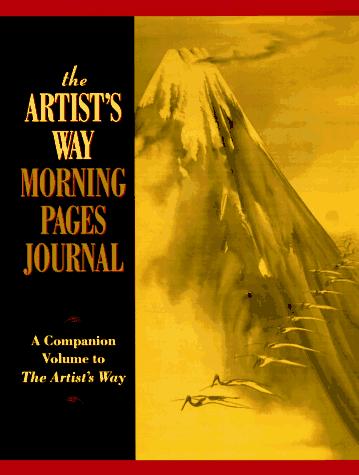
Julia Cameron’s morning pages practice is three longhand pages, first thing, stream of consciousness, every day. You don’t try to write well. You write whatever’s there, clear the mental static, and see what comes up underneath. Over weeks, it changes what you notice about yourself and your life.
This journal is built specifically for that practice — it’s large enough to fit three pages comfortably, and Cameron wrote the introduction explaining how to use it. You don’t need to have read The Artist’s Way to use it, though the two go together well.
Best for: people who want to do the morning pages practice and want a journal sized and framed for it.
Moleskine Classic Notebook, Large Hardcover by Moleskine
The Moleskine Classic is the general-purpose standard. It’s the notebook people carry everywhere and use for everything — morning pages, life notes, letter-to-future-self exercises, lists, questions, rambling thoughts. The ruled large hardcover has 240 pages, an elastic closure, and a back pocket.
There’s nothing proprietary here, which is also the point. If you want to use whatever journaling method resonates with you — including the self-discovery card decks where you reflect on a prompt and write freely — a plain Moleskine gives you room.
Best for: flexible all-purpose journaling without a built-in system.
Frequently Asked Questions
What’s the difference between a guided journal and a blank journal for self-discovery? A guided journal gives you prompts — questions or sentence starters — that pull out your thinking without you having to decide what to write. A blank journal puts you in charge. Guided works better when you’re not sure where to start; blank works better when you already know what you’re exploring. See self-discovery activities for specific prompts if you go the blank route.
Do I need a special journal for self-discovery, or does any notebook work? Any notebook works. What matters is that you write in it. That said, having one dedicated to self-discovery helps — it keeps your reflections in one place and makes it easier to look back. The questions to figure out who you are are the same whether you write them in a Moleskine or on a napkin.
How long should a self-discovery journal entry be? As long as it needs to be. Five minutes is enough for a gratitude check-in. Three pages is the morning pages standard. Some people write a paragraph; some write for an hour. The format matters less than the habit. For how to build a sustainable practice, see our self-discovery journal guide.
Guided or blank — which is better for finding your purpose? Both work. Guided journals are better when you’re starting out or feel stuck; they give you a frame. Blank journals are better when you know what you’re after and want room to think it through. The Five Minute Journal and The Self Journal are the guided options here; the Leuchtturm1917, Moleskine, and Artist’s Way Journal all leave the content to you.
Can I use more than one journal? Yes. Many people keep a daily habit journal (like The Five Minute Journal) alongside a freeform notebook. The practice matters more than the number of books on your shelf.
For the journaling practice itself, start with our self-discovery journal guide. For questions to work through, see questions to figure out who you are.