
Reading Time: est. 7 minutes
On this page
If you’re stuck in life, the right book depends on what’s holding you. For career limbo, start with Designing Your Life by Bill Burnett and Dave Evans. For that pressure that comes with a specific decade, The Defining Decade by Meg Jay. For a hard life transition you can’t quite name, Transitions by William Bridges. And if you suspect you’re getting in your own way, The Big Leap by Gay Hendricks names that pattern exactly.
These six books are sorted by the kind of stuck, which is the actual useful thing. If you’re looking for the deeper question underneath the stuck feeling, the best books on finding purpose is the parent list. For the experience of feeling truly trapped — not just stalled — the essay at feeling trapped in life goes deeper. And if you want the practical tools for breaking out of a stuck pattern, see feeling stuck in life: how to break free.
At a Glance
| Book | Best for |
|---|---|
| Designing Your Life by Bill Burnett & Dave Evans | Career limbo with no clear next move |
| The Defining Decade by Meg Jay | Feeling behind in your twenties |
| Transitions by William Bridges | Stuck in a life change you can’t name |
| The Big Leap by Gay Hendricks | Self-sabotage and invisible ceilings |
| Burnout by Emily & Amelia Nagoski | Too depleted to know where to start |
| When Things Fall Apart by Pema Chödrön | Crisis, loss, or ground-level reset |
Most of these are on audiobook too. New to Audible? You can start a membership trial and listen to one.
Designing Your Life by Bill Burnett and Dave Evans
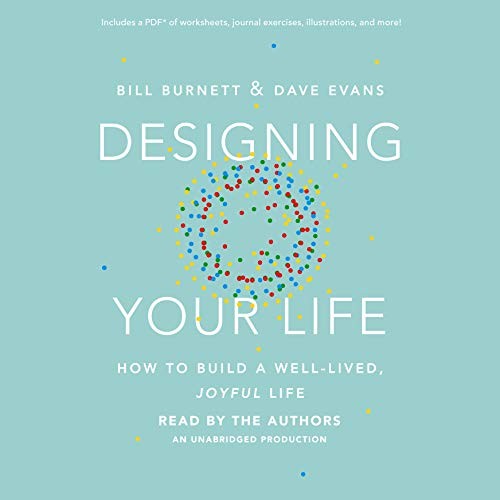
Burnett and Evans teach design at Stanford, and the core idea is that you stop trying to think your way to the right next move and start running small experiments instead. They call them prototypes: a conversation with someone doing the work you think you want, a short tryout, a side project. The data from those tells you more than spinning in your head ever will.
It’s the most actionable book on the list.
Best for: people stuck in career limbo who need a method, not a meditation.
The Defining Decade by Meg Jay
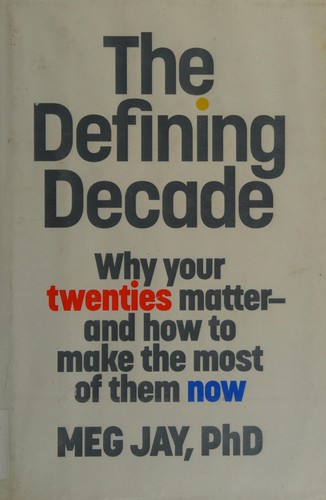
Jay is a clinical psychologist who spent years working with people in their twenties, and this book pushes back on a cultural message she kept hearing: that your twenties don’t count, that you have time, that you’ll figure it out later. Her argument is that they’re actually the decade when identity, career capital, and relationships are most changeable.
She doesn’t panic you. She just makes the case that what you do now matters more than the culture suggests.
Best for: anyone in their twenties who feels stuck and is waiting for life to start.
Transitions by William Bridges
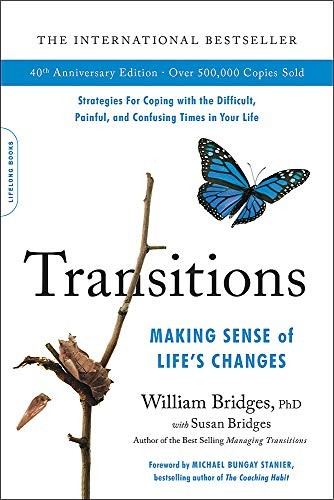
Bridges makes a distinction that most people miss: a change is an event (divorce, job loss, relocation), and a transition is the internal process that follows. The transition always starts with an ending — letting go of who you were — and goes through a “neutral zone” before a new beginning is possible. That neutral zone is where most people feel most stuck, and they feel stuck there because they don’t recognize it as a necessary phase.
This is the book that names the experience you’re having. People return to it at every major life shift.
Best for: anyone mid-transition who can’t see the other side yet.
The Big Leap by Gay Hendricks
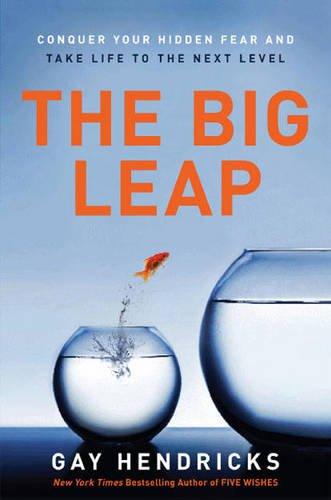
Hendricks’s central idea is the “upper limit problem”: an unconscious ceiling you’ve set on how successful, happy, or fulfilled you’re allowed to feel. When you approach that ceiling, he argues, you’ll find a way to sabotage yourself — pick a fight, get sick, create drama, back off — because staying within the limit feels safer than exceeding it. The book is about recognizing the pattern and dismantling it.
It’s a short read and a specific diagnosis. If your stuck feeling looks more like “I keep almost getting there and then something goes wrong,” this is your book.
Best for: people who keep getting in their own way right before a breakthrough.
Burnout by Emily and Amelia Nagoski
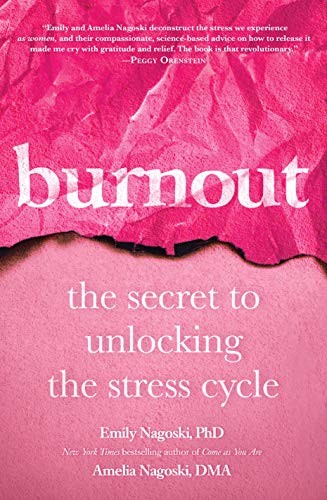
The Nagoskis’ central concept is completing the stress cycle. Modern life triggers the threat response but rarely gives the body a physical resolution — so the activation just stays. Burnout is what happens when that cycle never closes. The book is concrete about what actually completes it (movement, connection, creative expression) and honest about why depletion makes it hard to see what’s wrong.
It’s written with women’s physiology in mind but the stress-cycle model applies to anyone running on empty.
Best for: people too depleted to even figure out where to start.
When Things Fall Apart by Pema Chödrön
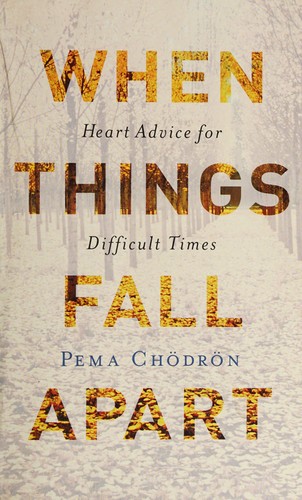
Chödrön is a Buddhist teacher, and this book was written from her own experience of a life falling apart. The core teaching is about leaning into groundlessness — the feeling of the rug being pulled out — rather than scrambling to fix it. It’s the one book here that isn’t trying to get you unstuck faster. It’s about sitting with the hard thing and discovering you can.
It’s a short book, sparse and honest. People reread it at the lowest moments and find something different each time.
Best for: anyone in crisis, grief, or a ground-level reset where advice feels useless.
Frequently Asked Questions
What’s the best book for feeling stuck in life? It depends on the kind of stuck. Career limbo: Designing Your Life. Life-stage pressure: The Defining Decade. Big change you can’t name: Transitions. Self-sabotage: The Big Leap. Exhaustion: Burnout. Loss or crisis: When Things Fall Apart. Picking by situation matters more than picking the “best” one.
How do I know which book is right for me? Start with the most honest description of your stuck. If you know what you want but can’t get there, look at The Big Leap. If you don’t know what you want, try Designing Your Life. If something hard happened and you’re in pieces, start with When Things Fall Apart. The feeling stuck in life: how to break free post can also help you identify the pattern.
Are these books for a specific age group? Most aren’t. The Defining Decade is specifically written for people in their twenties. The others apply at any stage — Transitions especially shows up at 30, 45, and 60 as often as it does at 25.
What if I’m stuck at a deeper level, down at meaning itself? That’s a different question, and these books mostly stay practical. For the deeper version of stuck, the best books on finding purpose goes there directly.
Is Burnout only for women? The Nagoskis write from a research base on women’s stress responses, and some of the framing reflects that. But the stress-cycle model and the practical tools apply to anyone who’s running on empty.
For the broader question of what getting unstuck looks like in practice, see feeling stuck in life: how to break free.