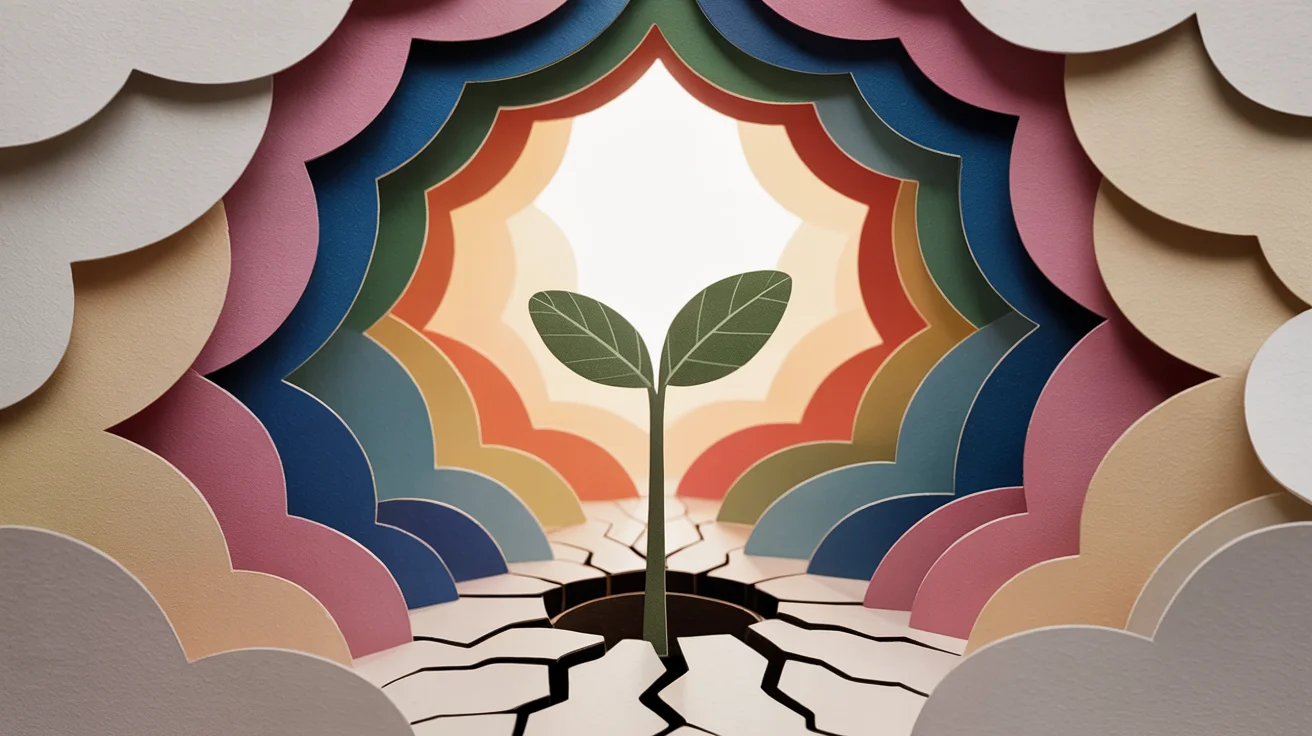

Writing about your future self is hard. I get it. You’re staring at a blank page, asked to describe someone you haven’t become yet. That’s a strange kind of vulnerability.
But here’s what we know— a student vision statement is a brief (30-50 word) description of your future self and goals, written in present tense as if already achieved. Unlike a mission statement which describes what you’re doing now, a vision statement describes where you’re going. Research by Dr. Gail Matthews found that people who write down their goals are 42% more likely to achieve them— and a personal vision statement is the foundation for goal-directed action.
Key Takeaways:
- A vision statement is future-focused. It describes who you want to become, not what you’re doing now. Keep it to 30-50 words— short enough to memorize, long enough to guide you.
- Writing down goals increases achievement by 42%. Dr. Gail Matthews’ research at Dominican University found that people who write down their goals significantly outperform those who don’t. A vision statement makes this concrete.
- Start with values when you don’t know what you want. If you’re uncertain about your future career, focus on what matters to you (creativity, helping others, intellectual challenge) rather than specific job titles.
- Your vision statement should evolve. Update it at major life transitions— starting college, graduation, career changes. It’s a living document, not a permanent declaration.
What Is a Personal Vision Statement (And Why Students Need One)
A personal vision statement is a brief description of your future self— typically 30-50 words— written in present tense as if you’ve already achieved it. It describes where you’re going, not where you are.
Here’s the thing— there’s a reason schools and career counselors keep asking you to write these. And it’s not just busywork.
Dr. Gail Matthews’ research at Dominican University found that people who write down their goals are 42% more likely to achieve them than those who just keep goals in their heads. Writing crystallizes thinking. It forces you to get specific.
But wait— vision statements and mission statements get confused constantly. Let me clear that up.
| Vision Statement | Mission Statement | |
|---|---|---|
| Focus | Future | Present |
| Question it answers | “Where am I going?” | “What am I doing now?” |
| Timeframe | 5-10 years out | Current |
| Example | “I am a nurse providing compassionate care in underserved communities” | “I’m studying pre-nursing while volunteering at a free clinic to gain patient care experience” |
See the difference? One points to who you want to become. The other describes what you’re doing about it.
Research on college students found that students who naturally create vivid personal visions also set more difficult and specific goals. The vision pulls you forward. It gives your daily decisions a north star.
If you want to go deeper into the differences between these documents— including how a personal manifesto differs from both— that’s worth exploring. But for now, let’s look at examples.
Vision Statement Examples by Student Type
The best vision statement examples are specific enough to guide decisions but flexible enough to accommodate growth. Here are 15+ examples organized by student type— use them as templates, not scripts.
A vision statement should be specific enough to say no to opportunities that don’t fit, but flexible enough to say yes to opportunities you haven’t imagined yet.
High School Students
These examples reflect typical high school concerns— college prep, identity exploration, first career thoughts.
-
The future healthcare worker— “I am a compassionate healthcare professional who helps patients feel heard and cared for during their most vulnerable moments. I combine scientific knowledge with genuine empathy to make a real difference in people’s lives.”
-
The future entrepreneur— “I am a business owner who creates products that solve real problems. I build a team I’m proud of and a company that gives me freedom to spend time with people I love.”
-
The future engineer— “I am an engineer designing solutions that make daily life easier for millions of people. I work on projects I’m genuinely curious about, with colleagues who challenge me to grow.”
-
The exploring student (uncertainty is okay)— “I am doing work I find meaningful that combines creativity with helping others. I don’t have all the answers yet, but I’m building skills that keep doors open while I figure it out.”
-
The creative student— “I am a creative professional whose work moves people emotionally. Whether through writing, design, or art, I create things that make people feel something.”
College Students
These examples reflect college-level career exploration and emerging professional identity.
-
The aspiring lawyer— “I am a practicing attorney who uses legal expertise to advocate for people who can’t advocate for themselves. I work on cases that matter, with a firm that values impact over billable hours.”
-
The future teacher— “I am a teacher who helps students discover what they’re capable of. I create classrooms where curiosity is encouraged and every student feels seen.”
-
The business major— “I am a business leader who builds companies that treat employees well while driving sustainable growth. I prove that good business and good values aren’t mutually exclusive.”
-
The psychology student— “I am a therapist who helps people understand themselves better and navigate life’s transitions with more confidence. I create a practice built on genuine human connection.”
-
The uncertain college student— “I am building a career that combines analytical thinking with making a tangible impact. I’m still exploring which field that will be, and that’s part of the adventure.”
-
The STEM major— “I am a researcher discovering solutions to problems most people don’t even know exist yet. I work at the edge of what’s known, pushing boundaries.”
Graduate Students
These examples reflect advanced career focus and specialization.
-
The MBA student— “I am a leader who creates environments where talented people do their best work. I drive results while building teams people want to be part of.”
-
The medical student— “I am a physician who practices medicine as both science and art. I see patients as whole people, not just symptoms.”
-
The PhD candidate— “I am a scholar whose research influences how my field understands fundamental questions. I mentor the next generation of researchers with the same care I received.”
-
The law student— “I am an attorney known for being prepared, ethical, and effective. I choose work that lets me sleep well at night.”
How to Write Your Vision Statement (Step-by-Step)
Writing your vision statement takes about 30 minutes of focused reflection. Here’s the five-step process that works best for students.
Start with values, not job titles. What matters to you will outlast any specific career.
Step 1— Reflect on Your Values
I love this question— what matters most to you? Not what should matter— what actually does.
- What makes you lose track of time?
- When have you felt most proud of yourself?
- What would you regret not trying?
Step 2— Identify Your Strengths
What comes naturally to you that others find difficult?
- What do people consistently ask for your help with?
- What skills feel effortless (even if they took work to develop)?
- When do you feel most confident?
Step 3— Consider Your Contribution
What do you want to give to the world?
- What problems make you angry or energized?
- Who do you want to help?
- What would make your work feel meaningful?
According to The Ohio State University’s Fisher College of Business, basing your career vision on personal values helps you make decisions that feel aligned rather than forced. And goal-setting research shows that specific goals dramatically outperform vague ones.
Step 4— Draft in Present Tense
Write as if you’re already living your vision. “I am…” not “I want to be…”
- Aim for 30-50 words
- Be specific enough to guide decisions
- Keep it personal— this is for you, not a college application
Step 5— Test and Refine
A good vision statement should:
- Excite you when you read it
- Help you say no to opportunities that don’t fit
- Feel true to who you are (not who you think you should be)
Worked Example—
Values— Helping others, intellectual challenge, creativity
Strengths— Writing, explaining complex ideas, connecting with people
Contribution— Making difficult topics accessible
Draft vision— “I am a communicator who makes complex ideas accessible and engaging. I create content that helps people understand things they never thought they could, opening doors they didn’t know existed.”
What If You Don’t Know What You Want?
Not knowing what you want doesn’t mean you can’t write a vision statement— it means you write a different kind of vision statement. One focused on values and exploration rather than specific outcomes.
That’s okay. That’s actually more common than you think.
Here’s something most advice ignores— in his book So Good They Can’t Ignore You, Cal Newport cites research by psychologist Robert Vallerand showing that only 4% of college students’ identified passions were even work-related. So if you don’t have a burning passion pointing you toward a specific career, you’re in the vast majority.
A vision statement can be exploratory. You don’t need to know the destination to point yourself in a direction.
Try these exploratory vision statement examples—
- “I am doing work that combines intellectual challenge with helping others. I don’t have the job title yet, but I know the feeling I’m looking for.”
- “I am building skills that keep doors open while I explore what calls to me. I’m curious, not committed— and that’s strategic.”
- “I am someone who experiments with different paths to find what fits. I collect experiences, not just credentials.”
If you’re wrestling with deeper questions about direction and meaning, exploring resources on finding your purpose in life might help. But remember— uncertainty isn’t weakness. It’s honesty.
Using and Updating Your Vision Statement
A vision statement only works if you use it. Here’s how to put yours into action and when to update it.
Post it somewhere you’ll see it. Review it when making decisions. Ask yourself— “Does this opportunity move me closer to my vision?”
Your vision statement should evolve as you do. Update it at major life transitions or at least annually— it’s a living document, not a permanent declaration.
When to Update Your Vision Statement—
- Starting college or a new program
- Graduating (high school, college, grad school)
- After significant experiences (internship, study abroad, major project)
- When your values shift (this happens— it’s growth, not failure)
- At least once per year, even if nothing major changed
FAQ— Common Vision Statement Questions
Here are quick answers to the questions students ask most often about personal vision statements.
How long should a student vision statement be?
Aim for 30-50 words or 1-2 sentences. Short enough to memorize, long enough to be meaningful. If you can’t remember it, it’s too long. If it’s generic, it’s too short.
Should I include specific career goals in my vision statement?
You can, but values-based visions often last longer than career-specific ones. “I help people through creative communication” may serve you better than “I am a graphic designer at Nike”— it gives you more room to grow.
What’s the difference between a vision statement and goals?
Your vision is the big picture— who you want to become. Goals are the specific, measurable steps to get there. Vision equals destination. Goals equal route. You need both.
Can my vision statement change?
Absolutely. Update it at major transitions (starting college, graduation, career changes) or at least annually. A vision statement that never evolves probably isn’t guiding your decisions.
What if my vision statement doesn’t excite me?
Rewrite it. A vision statement should pull you forward. If reading it feels like a chore, you’ve written someone else’s vision, not yours.
For more examples of how to articulate your purpose, check out mission statement examples to see the companion document to your vision.
Your Turn
A personal vision statement won’t give you all the answers. But it will give you something better— a direction worth exploring.
Remember that blank page we started with? The one asking you to describe a future you can barely imagine?
You don’t need to see the whole path. You just need to know which direction feels true.
Research backs this up— writing down your goals genuinely makes you more likely to achieve them. Not marginally. Forty-two percent more likely. That’s not magical thinking. That’s what happens when you get clear about what you’re working toward.
So try writing your vision statement using the process above. It doesn’t have to be perfect. It just has to be yours.
And if you want to keep exploring how to live with purpose as you figure out your next steps— that’s a journey worth taking.
You have something to offer. I believe in you.