# Best Ikigai Books (and Which to Skip)
Published: 2026-06-28 · Categories: philosophy-meaning
> The four best ikigai books ranked by what they're actually teaching: two lean on the Western Venn-diagram chart, two reflect the authentic Japanese concept of small daily joys.
If you want the most popular ikigai book, [*Ikigai: The Japanese Secret to a Long and Happy Life*](https://www.amazon.com/dp/0143130722/?tag=tmm072-20) by García and Miralles is the one everyone reads first. For the authentic Japanese concept — small daily joys, not a career-alignment chart — read [*The Little Book of Ikigai*](https://www.amazon.com/dp/1786489031/?tag=tmm072-20) or [*Ikigai: The Japanese Art of a Meaningful Life*](https://www.amazon.com/dp/0857834916/?tag=tmm072-20) by Yukari Mitsuhashi. And [*Awakening Your Ikigai*](https://www.amazon.com/dp/1615194754/?tag=tmm072-20) by Ken Mogi sits in the middle — it uses the five pillars framework, not the Venn diagram.
One thing worth knowing before you pick: the four-circle Venn diagram you've probably seen — "do what you love / are good at / can be paid for / the world needs" — was not created in Japan. It was invented by a British blogger in 2014, adapting a Spanish purpose framework. Our article on [ikigai meaning](/ikigai-meaning/) covers where the chart actually came from and what Japanese ikigai really means. Some books on this list repeat that pop-chart framing; others don't. If that distinction matters to you (and it might), it's worth knowing which is which before you buy. These also make for good companion reading to the [best books on finding purpose](/best-books-finding-purpose/) — ikigai is one cultural tradition among several that takes meaning seriously.
## Key Takeaways
- **Want the bestseller everyone's read?** [*Ikigai*](https://www.amazon.com/dp/0143130722/?tag=tmm072-20) by García and Miralles is readable and well-researched, but it leans on the Western Venn-diagram framing.
- **Want the authentic Japanese concept?** [*Ikigai: The Japanese Art of a Meaningful Life*](https://www.amazon.com/dp/0857834916/?tag=tmm072-20) by Yukari Mitsuhashi is the most culturally grounded book here — she grew up in Japan.
- **Want a neuroscientist's take on small daily joys?** [*The Little Book of Ikigai*](https://www.amazon.com/dp/1786489031/?tag=tmm072-20) by Ken Mogi is the shortest read and the clearest argument that ikigai is about the ordinary, not the grand.
- **Want a longer Mogi book with more depth?** [*Awakening Your Ikigai*](https://www.amazon.com/dp/1615194754/?tag=tmm072-20) covers his five-pillars framework in more detail.
- **Worried about the Venn diagram?** Skip books that lean on it if what you're after is the actual Japanese tradition — Mogi and Mitsuhashi are the better options.
## At a Glance
| Book | Best for |
|------|----------|
| [*Ikigai: The Japanese Secret to a Long and Happy Life*](https://www.amazon.com/dp/0143130722/?tag=tmm072-20) by Héctor García & Francesc Miralles | The popular entry point, longevity research |
| [*The Little Book of Ikigai*](https://www.amazon.com/dp/1786489031/?tag=tmm072-20) by Ken Mogi | Short read, authentic small-joys framing |
| [*Awakening Your Ikigai*](https://www.amazon.com/dp/1615194754/?tag=tmm072-20) by Ken Mogi | Mogi's five pillars in full |
| [*Ikigai: The Japanese Art of a Meaningful Life*](https://www.amazon.com/dp/0857834916/?tag=tmm072-20) by Yukari Mitsuhashi | Culturally grounded, grew up in Japan |
Most of these are on audiobook too. New to Audible? You can [start a membership trial](https://www.amazon.com/hz/audible/arya/mlp?tag=tmm072-20) and listen to one.
## [*Ikigai: The Japanese Secret to a Long and Happy Life*](https://www.amazon.com/dp/0143130722/?tag=tmm072-20) by Héctor García & Francesc Miralles
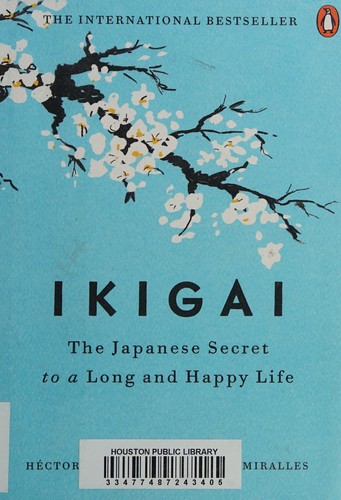 This is the book most people mean when they say they want to read about ikigai. García (a Spaniard living in Japan) and Miralles traveled to Ogimi, a village in Okinawa with an unusually high percentage of centenarians, and interviewed residents about how they live. The result is part longevity research, part cultural reflection — how Japanese elders eat, move, stay social, and keep a sense of purpose into old age.
Where it drifts from the authentic concept: the book does work in the four-circle Venn framework, treating ikigai as something like a career-purpose sweet spot. That framing helps Western readers get traction, but it's not what ikigai means to most Japanese people. If you read it knowing that, it's a worthwhile and readable book. If you take the Venn diagram as the definition, you'll end up with a Western productivity concept wearing Japanese clothing.
**Best for:** readers who want a well-reported introduction with longevity research, and who can hold the Venn-diagram framing lightly.
## [*The Little Book of Ikigai*](https://www.amazon.com/dp/1786489031/?tag=tmm072-20) by Ken Mogi
This is the book most people mean when they say they want to read about ikigai. García (a Spaniard living in Japan) and Miralles traveled to Ogimi, a village in Okinawa with an unusually high percentage of centenarians, and interviewed residents about how they live. The result is part longevity research, part cultural reflection — how Japanese elders eat, move, stay social, and keep a sense of purpose into old age.
Where it drifts from the authentic concept: the book does work in the four-circle Venn framework, treating ikigai as something like a career-purpose sweet spot. That framing helps Western readers get traction, but it's not what ikigai means to most Japanese people. If you read it knowing that, it's a worthwhile and readable book. If you take the Venn diagram as the definition, you'll end up with a Western productivity concept wearing Japanese clothing.
**Best for:** readers who want a well-reported introduction with longevity research, and who can hold the Venn-diagram framing lightly.
## [*The Little Book of Ikigai*](https://www.amazon.com/dp/1786489031/?tag=tmm072-20) by Ken Mogi
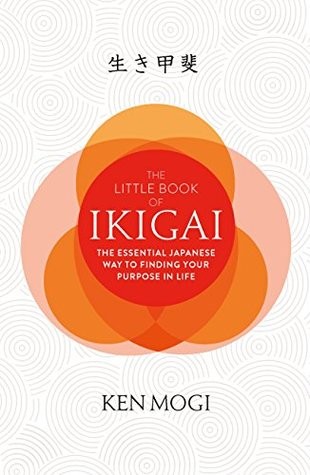 Ken Mogi is a neuroscientist in Tokyo who has spent his career thinking about consciousness, attention, and the brain. His book is the one most honest about what ikigai actually is in Japanese life: not a grand purpose or a career-fit diagram, but a quality of attention to ordinary things. The example he uses is Jiro Ono, the sushi chef — a man whose ikigai is the daily practice of making perfect sushi, not a mission statement.
Mogi's five pillars (starting small, accepting yourself, harmony with others, the joy of little things, being present) are framed as ways into ikigai, not a system for finding your calling. It's a short book, but it's the clearest English-language argument that ikigai is about the ordinary, not the grand.
**Best for:** readers who want the authentic Japanese concept and prefer a concise read.
## [*Awakening Your Ikigai*](https://www.amazon.com/dp/1615194754/?tag=tmm072-20) by Ken Mogi
Mogi's longer book covers the same five pillars but with more space for stories, cultural examples, and his own neuroscience perspective. The title is a bit more dramatic than the content — the book is still grounded in the everyday rather than the transformational. He writes about Miyazaki's films, tea ceremony, baseball in Japan, and how ikigai can live in a hobby as easily as a career.
If *The Little Book* felt too compressed, this one gives the ideas more room. And because Mogi doesn't use the four-circle diagram, it's one of the cleaner windows into what Japanese people actually mean when they talk about ikigai. For the relationship between ikigai and the broader search for meaning, see also [books like *Man's Search for Meaning*](/books-like-mans-search-for-meaning/) — Frankl's work sits in a parallel tradition.
**Best for:** readers who want Mogi's framework with more depth and more stories.
## [*Ikigai: The Japanese Art of a Meaningful Life*](https://www.amazon.com/dp/0857834916/?tag=tmm072-20) by Yukari Mitsuhashi
Mitsuhashi grew up in Japan and now lives in Los Angeles — which puts her in an interesting position for this kind of book. She's writing the authentic concept to a Western audience without flattening it into something else. The book is relatively short and beautifully produced, and it includes case studies from Japanese people across different walks of life: a university lecturer, a doctor, a craftsperson. Their ikigai look nothing like a career alignment chart.
This is the most culturally grounded book on this list, and the one most likely to leave you with an accurate sense of what ikigai means in practice. It doesn't give you a worksheet. It gives you examples of people who have found something worth getting up for — usually small, specific, and decades-old.
**Best for:** readers who want the authentic Japanese framing from someone who lived it.
## Frequently Asked Questions
**What's the best ikigai book to start with?**
Start with *Ikigai* by García and Miralles if you want the popular introduction with longevity research. Start with *The Little Book of Ikigai* by Ken Mogi if you want the more authentic Japanese framing. The two books are answering slightly different questions.
**Is the four-circle Venn diagram actually Japanese?**
No. As we cover in detail at [ikigai meaning](/ikigai-meaning/), the diagram was created by a British blogger in 2014, adapting a Spanish framework about purpose. It's a useful thinking tool, but it's not ikigai. Books that teach it as the definition are teaching a Western remix.
**What does ikigai actually mean?**
The word combines *iki* (life, alive) and *gai* (worth, benefit). It means a reason for living — and for most Japanese people, that reason is small and ordinary: a morning ritual, a craft practiced for decades, time with family. It's not a career-alignment system.
**Do I need to read more than one of these books?**
Probably not, unless you're doing serious research into the concept. Most people get what they need from one. If you read García and Miralles and want to go deeper into the authentic Japanese tradition, add Mitsuhashi or Mogi.
**How does ikigai relate to purpose?**
They're related but different. Purpose tends to ask "why am I here" in a large, long-horizon way. Ikigai asks "what makes today worth living" — a smaller, more immediate question. For the wider purpose question, [the best books on finding purpose](/best-books-finding-purpose/) is a better starting point.
---
Source: https://themeaningmovement.com/best-ikigai-books/
Ken Mogi is a neuroscientist in Tokyo who has spent his career thinking about consciousness, attention, and the brain. His book is the one most honest about what ikigai actually is in Japanese life: not a grand purpose or a career-fit diagram, but a quality of attention to ordinary things. The example he uses is Jiro Ono, the sushi chef — a man whose ikigai is the daily practice of making perfect sushi, not a mission statement.
Mogi's five pillars (starting small, accepting yourself, harmony with others, the joy of little things, being present) are framed as ways into ikigai, not a system for finding your calling. It's a short book, but it's the clearest English-language argument that ikigai is about the ordinary, not the grand.
**Best for:** readers who want the authentic Japanese concept and prefer a concise read.
## [*Awakening Your Ikigai*](https://www.amazon.com/dp/1615194754/?tag=tmm072-20) by Ken Mogi
Mogi's longer book covers the same five pillars but with more space for stories, cultural examples, and his own neuroscience perspective. The title is a bit more dramatic than the content — the book is still grounded in the everyday rather than the transformational. He writes about Miyazaki's films, tea ceremony, baseball in Japan, and how ikigai can live in a hobby as easily as a career.
If *The Little Book* felt too compressed, this one gives the ideas more room. And because Mogi doesn't use the four-circle diagram, it's one of the cleaner windows into what Japanese people actually mean when they talk about ikigai. For the relationship between ikigai and the broader search for meaning, see also [books like *Man's Search for Meaning*](/books-like-mans-search-for-meaning/) — Frankl's work sits in a parallel tradition.
**Best for:** readers who want Mogi's framework with more depth and more stories.
## [*Ikigai: The Japanese Art of a Meaningful Life*](https://www.amazon.com/dp/0857834916/?tag=tmm072-20) by Yukari Mitsuhashi
Mitsuhashi grew up in Japan and now lives in Los Angeles — which puts her in an interesting position for this kind of book. She's writing the authentic concept to a Western audience without flattening it into something else. The book is relatively short and beautifully produced, and it includes case studies from Japanese people across different walks of life: a university lecturer, a doctor, a craftsperson. Their ikigai look nothing like a career alignment chart.
This is the most culturally grounded book on this list, and the one most likely to leave you with an accurate sense of what ikigai means in practice. It doesn't give you a worksheet. It gives you examples of people who have found something worth getting up for — usually small, specific, and decades-old.
**Best for:** readers who want the authentic Japanese framing from someone who lived it.
## Frequently Asked Questions
**What's the best ikigai book to start with?**
Start with *Ikigai* by García and Miralles if you want the popular introduction with longevity research. Start with *The Little Book of Ikigai* by Ken Mogi if you want the more authentic Japanese framing. The two books are answering slightly different questions.
**Is the four-circle Venn diagram actually Japanese?**
No. As we cover in detail at [ikigai meaning](/ikigai-meaning/), the diagram was created by a British blogger in 2014, adapting a Spanish framework about purpose. It's a useful thinking tool, but it's not ikigai. Books that teach it as the definition are teaching a Western remix.
**What does ikigai actually mean?**
The word combines *iki* (life, alive) and *gai* (worth, benefit). It means a reason for living — and for most Japanese people, that reason is small and ordinary: a morning ritual, a craft practiced for decades, time with family. It's not a career-alignment system.
**Do I need to read more than one of these books?**
Probably not, unless you're doing serious research into the concept. Most people get what they need from one. If you read García and Miralles and want to go deeper into the authentic Japanese tradition, add Mitsuhashi or Mogi.
**How does ikigai relate to purpose?**
They're related but different. Purpose tends to ask "why am I here" in a large, long-horizon way. Ikigai asks "what makes today worth living" — a smaller, more immediate question. For the wider purpose question, [the best books on finding purpose](/best-books-finding-purpose/) is a better starting point.
---
Source: https://themeaningmovement.com/best-ikigai-books/