# Best Existentialism Books for Beginners
Published: 2026-06-28 · Categories: philosophy-meaning
> The best existentialism books for beginners: start with Sophie's World or At the Existentialist Café, then move to Camus and Sartre. Ordered easiest to primary texts.
If you're new to existentialism, start with [*At the Existentialist Café*](https://www.amazon.com/dp/1590518896/?tag=tmm072-20) by Sarah Bakewell or [*Sophie's World*](https://www.amazon.com/dp/0374530718/?tag=tmm072-20) by Jostein Gaarder — both read like stories and give you the context to understand the harder texts. Once those feel comfortable, [*The Consolations of Philosophy*](https://www.amazon.com/dp/0679779175/?tag=tmm072-20) is a warm bridge to reading the primary thinkers. The primary texts themselves — [*The Stranger*](https://www.amazon.com/dp/0679720200/?tag=tmm072-20), [*Existentialism Is a Humanism*](https://www.amazon.com/dp/0300115466/?tag=tmm072-20), and [*Man's Search for Meaning*](https://www.amazon.com/dp/0807014273/?tag=tmm072-20) — are short and worth reading once you have a frame for them.
Existentialism asks what it means to live with freedom and responsibility in a world that offers no ready-made answers — right at the center of [meaning and purpose](/what-is-life-meaning-definition-exploration/). The books below are ordered from most accessible to densest, so start wherever you are. For a close look at how Camus handled these questions in fiction, see our [review of *The Stranger*](/the-stranger-albert-camus-review/). If you've already read Frankl and want similar books, [books like *Man's Search for Meaning*](/books-like-mans-search-for-meaning/) is the next step.
## Key Takeaways
- **Want to understand the whole tradition before reading any of it?** [*Sophie's World*](https://www.amazon.com/dp/0374530718/?tag=tmm072-20) covers Western philosophy from Socrates to Sartre in novel form.
- **Want the story of existentialism as a movement?** [*At the Existentialist Café*](https://www.amazon.com/dp/1590518896/?tag=tmm072-20) follows the actual people — Sartre, Beauvoir, Camus, Heidegger — and makes the ideas feel alive.
- **Want philosophy that connects to your daily life?** [*The Consolations of Philosophy*](https://www.amazon.com/dp/0679779175/?tag=tmm072-20) is the most approachable non-fiction entry point.
- **Ready for a primary text?** [*The Stranger*](https://www.amazon.com/dp/0679720200/?tag=tmm072-20) is short, powerful, and the most widely read introduction to Camus.
- **Want the philosophical argument in its simplest form?** [*Existentialism Is a Humanism*](https://www.amazon.com/dp/0300115466/?tag=tmm072-20) is a single lecture Sartre gave in 1945 — the clearest statement of his ideas.
- **Looking for existentialism applied to real suffering?** [*Man's Search for Meaning*](https://www.amazon.com/dp/0807014273/?tag=tmm072-20) is Frankl's account of finding meaning in a concentration camp — technically logotherapy, not pure existentialism, but inseparable from it.
## At a Glance
| Book | Best for |
|------|----------|
| [*Sophie's World*](https://www.amazon.com/dp/0374530718/?tag=tmm072-20) by Jostein Gaarder | Broadest beginner on-ramp |
| [*At the Existentialist Café*](https://www.amazon.com/dp/1590518896/?tag=tmm072-20) by Sarah Bakewell | The movement as a human story |
| [*The Consolations of Philosophy*](https://www.amazon.com/dp/0679779175/?tag=tmm072-20) by Alain de Botton | Philosophy applied to everyday problems |
| [*The Stranger*](https://www.amazon.com/dp/0679720200/?tag=tmm072-20) by Albert Camus | First primary text to read |
| [*Existentialism Is a Humanism*](https://www.amazon.com/dp/0300115466/?tag=tmm072-20) by Jean-Paul Sartre | Sartre's core argument, short and clear |
| [*Man's Search for Meaning*](https://www.amazon.com/dp/0807014273/?tag=tmm072-20) by Viktor E. Frankl | Meaning-making under extreme conditions |
Most of these are on audiobook too. New to Audible? You can [start a membership trial](https://www.amazon.com/hz/audible/arya/mlp?tag=tmm072-20) and listen to one.
## [*Sophie's World*](https://www.amazon.com/dp/0374530718/?tag=tmm072-20) by Jostein Gaarder
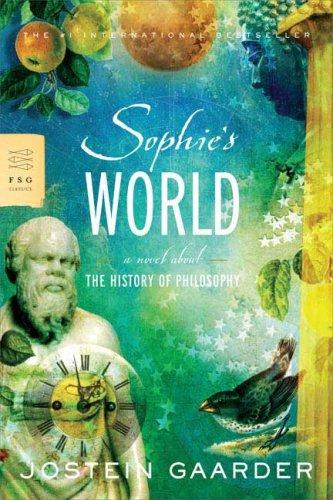 A fourteen-year-old girl starts receiving mysterious letters from a philosopher, and the correspondence walks her through the history of Western thought from the pre-Socratics to Sartre. You absorb the ideas through story, and by the time you reach the existentialists, you already have the context they were responding to. If you've ever felt intimidated by philosophy, this is the place to start.
**Best for:** anyone who wants the big picture before picking up a primary text.
## [*At the Existentialist Café*](https://www.amazon.com/dp/1590518896/?tag=tmm072-20) by Sarah Bakewell
A fourteen-year-old girl starts receiving mysterious letters from a philosopher, and the correspondence walks her through the history of Western thought from the pre-Socratics to Sartre. You absorb the ideas through story, and by the time you reach the existentialists, you already have the context they were responding to. If you've ever felt intimidated by philosophy, this is the place to start.
**Best for:** anyone who wants the big picture before picking up a primary text.
## [*At the Existentialist Café*](https://www.amazon.com/dp/1590518896/?tag=tmm072-20) by Sarah Bakewell
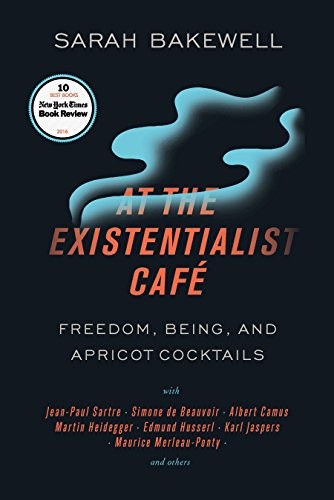 Bakewell tells the story of existentialism through the people who created it — Sartre and Beauvoir at their café tables, Camus writing in occupied Paris. She explains the philosophy, but the frame is biographical and the writing is clear. You finish knowing what these thinkers believed and how they came to believe it.
This is the best single introduction if you want to read the primary texts afterward. It gives you the map first.
**Best for:** readers who learn ideas better through people than through argument.
## [*The Consolations of Philosophy*](https://www.amazon.com/dp/0679779175/?tag=tmm072-20) by Alain de Botton
Bakewell tells the story of existentialism through the people who created it — Sartre and Beauvoir at their café tables, Camus writing in occupied Paris. She explains the philosophy, but the frame is biographical and the writing is clear. You finish knowing what these thinkers believed and how they came to believe it.
This is the best single introduction if you want to read the primary texts afterward. It gives you the map first.
**Best for:** readers who learn ideas better through people than through argument.
## [*The Consolations of Philosophy*](https://www.amazon.com/dp/0679779175/?tag=tmm072-20) by Alain de Botton
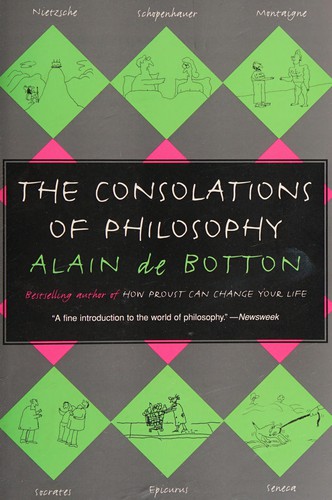 De Botton takes six philosophers and matches each to a common human problem: unpopularity, heartbreak, anxiety. The Nietzsche chapter connects directly to existentialist themes, and the approach throughout treats philosophy as a practice for living, not an academic exercise. De Botton writes like someone who actually enjoys sentences.
**Best for:** readers who want philosophy connected to daily life before they go deeper.
## [*The Stranger*](https://www.amazon.com/dp/0679720200/?tag=tmm072-20) by Albert Camus
De Botton takes six philosophers and matches each to a common human problem: unpopularity, heartbreak, anxiety. The Nietzsche chapter connects directly to existentialist themes, and the approach throughout treats philosophy as a practice for living, not an academic exercise. De Botton writes like someone who actually enjoys sentences.
**Best for:** readers who want philosophy connected to daily life before they go deeper.
## [*The Stranger*](https://www.amazon.com/dp/0679720200/?tag=tmm072-20) by Albert Camus
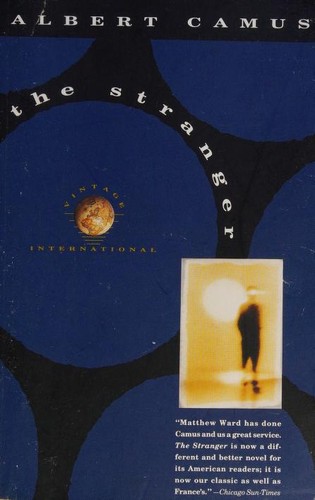 Short enough to read in an afternoon. Meursault moves through his life with flat indifference — his mother dies, he falls into a relationship, commits a violent act, faces execution — and describes all of it in the same affectless tone. That's the point. Camus is showing what life looks like stripped of the meaning we project onto it. Technically absurdism, but close enough to existentialism that it belongs here first. We have a full [review of *The Stranger*](/the-stranger-albert-camus-review/) if you want to go deeper.
**Best for:** readers ready for their first primary text.
## [*Existentialism Is a Humanism*](https://www.amazon.com/dp/0300115466/?tag=tmm072-20) by Jean-Paul Sartre
Short enough to read in an afternoon. Meursault moves through his life with flat indifference — his mother dies, he falls into a relationship, commits a violent act, faces execution — and describes all of it in the same affectless tone. That's the point. Camus is showing what life looks like stripped of the meaning we project onto it. Technically absurdism, but close enough to existentialism that it belongs here first. We have a full [review of *The Stranger*](/the-stranger-albert-camus-review/) if you want to go deeper.
**Best for:** readers ready for their first primary text.
## [*Existentialism Is a Humanism*](https://www.amazon.com/dp/0300115466/?tag=tmm072-20) by Jean-Paul Sartre
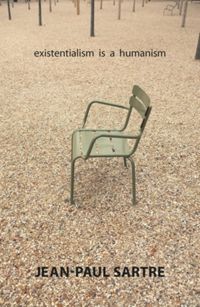 In October 1945, Sartre gave a public lecture defending existentialism against its critics. This book is that lecture, about sixty pages of core text, plus a Q&A and his essay on Camus's *The Stranger*. The argument: existence precedes essence, humans are radically free, and that freedom carries full responsibility. Read this after *At the Existentialist Café* — the argument lands better with context. Far shorter than *Being and Nothingness*, which is not a beginner book.
**Best for:** readers who want Sartre's core argument from Sartre himself.
## [*Man's Search for Meaning*](https://www.amazon.com/dp/0807014273/?tag=tmm072-20) by Viktor E. Frankl
In October 1945, Sartre gave a public lecture defending existentialism against its critics. This book is that lecture, about sixty pages of core text, plus a Q&A and his essay on Camus's *The Stranger*. The argument: existence precedes essence, humans are radically free, and that freedom carries full responsibility. Read this after *At the Existentialist Café* — the argument lands better with context. Far shorter than *Being and Nothingness*, which is not a beginner book.
**Best for:** readers who want Sartre's core argument from Sartre himself.
## [*Man's Search for Meaning*](https://www.amazon.com/dp/0807014273/?tag=tmm072-20) by Viktor E. Frankl
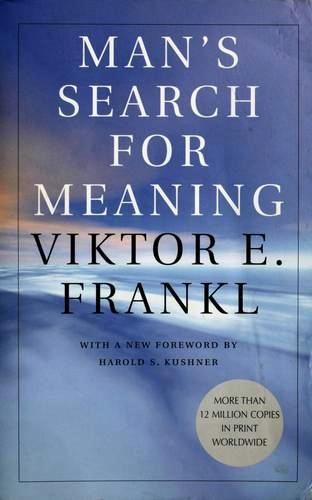 Frankl survived four Nazi concentration camps and wrote this in nine days after the war. The first half is what he witnessed and how people found ways to endure. The second half outlines logotherapy: humans can survive almost any how if they have a why. The book draws from existentialist ideas about freedom and meaning-making and applies them at the extreme edge of human experience.
It belongs on this list as the best demonstration of what these ideas look like when they're all that's left. For similar books, see [books like *Man's Search for Meaning*](/books-like-mans-search-for-meaning/).
**Best for:** readers who want existentialist ideas tested against real suffering.
## Frequently Asked Questions
**What existentialism book should I read first?**
If you have no background, start with *At the Existentialist Café* or *Sophie's World*. Both read like stories and give you the context to make the harder texts land. If you want to go straight to a primary text, *The Stranger* is the shortest and most readable entry point.
**What's the difference between a primary text and an introduction?**
Primary texts are written by the existentialists themselves — Sartre, Camus, Frankl. Introductions are written about them. Existentialist primary texts can be dense without context, so for most beginners, *At the Existentialist Café* or *Sophie's World* first makes the originals much more worthwhile. For the wider [question of what meaning actually is](/what-is-life-meaning-definition-exploration/), that hub is a good companion.
**Is existentialism depressing?**
The tradition is more honest about difficulty than most philosophy — it doesn't claim the world has a built-in purpose waiting for you to find it. But the move from there is toward freedom and responsibility. Sartre makes this case in *Existentialism Is a Humanism*, and Frankl's book is one of the more hopeful things you'll read, precisely because it holds nothing back about what he witnessed.
**Is *Man's Search for Meaning* an existentialism book?**
Partly. Frankl drew from the existentialist tradition and treats meaning as something we create rather than find. But he developed his own framework (logotherapy) and disagreed with Sartre on several points. Most existentialism reading lists include him because the overlap is significant. For books in a similar vein, see [books like *Man's Search for Meaning*](/books-like-mans-search-for-meaning/).
**Do I need to read all of these?**
No. Pick by where you are: *Sophie's World* or *At the Existentialist Café* if you want context first; *The Stranger* if you'd rather start with a short novel; *Existentialism Is a Humanism* if you want the argument directly from Sartre; *Man's Search for Meaning* if you're asking these questions because life has gotten hard.
---
Source: https://themeaningmovement.com/best-existentialism-books-for-beginners/
Frankl survived four Nazi concentration camps and wrote this in nine days after the war. The first half is what he witnessed and how people found ways to endure. The second half outlines logotherapy: humans can survive almost any how if they have a why. The book draws from existentialist ideas about freedom and meaning-making and applies them at the extreme edge of human experience.
It belongs on this list as the best demonstration of what these ideas look like when they're all that's left. For similar books, see [books like *Man's Search for Meaning*](/books-like-mans-search-for-meaning/).
**Best for:** readers who want existentialist ideas tested against real suffering.
## Frequently Asked Questions
**What existentialism book should I read first?**
If you have no background, start with *At the Existentialist Café* or *Sophie's World*. Both read like stories and give you the context to make the harder texts land. If you want to go straight to a primary text, *The Stranger* is the shortest and most readable entry point.
**What's the difference between a primary text and an introduction?**
Primary texts are written by the existentialists themselves — Sartre, Camus, Frankl. Introductions are written about them. Existentialist primary texts can be dense without context, so for most beginners, *At the Existentialist Café* or *Sophie's World* first makes the originals much more worthwhile. For the wider [question of what meaning actually is](/what-is-life-meaning-definition-exploration/), that hub is a good companion.
**Is existentialism depressing?**
The tradition is more honest about difficulty than most philosophy — it doesn't claim the world has a built-in purpose waiting for you to find it. But the move from there is toward freedom and responsibility. Sartre makes this case in *Existentialism Is a Humanism*, and Frankl's book is one of the more hopeful things you'll read, precisely because it holds nothing back about what he witnessed.
**Is *Man's Search for Meaning* an existentialism book?**
Partly. Frankl drew from the existentialist tradition and treats meaning as something we create rather than find. But he developed his own framework (logotherapy) and disagreed with Sartre on several points. Most existentialism reading lists include him because the overlap is significant. For books in a similar vein, see [books like *Man's Search for Meaning*](/books-like-mans-search-for-meaning/).
**Do I need to read all of these?**
No. Pick by where you are: *Sophie's World* or *At the Existentialist Café* if you want context first; *The Stranger* if you'd rather start with a short novel; *Existentialism Is a Humanism* if you want the argument directly from Sartre; *Man's Search for Meaning* if you're asking these questions because life has gotten hard.
---
Source: https://themeaningmovement.com/best-existentialism-books-for-beginners/